This content is not available in your region
CE86-WORST Beef Stews You Should NEVER Buy And 3 That Are Actually Better - Consumer Exposed
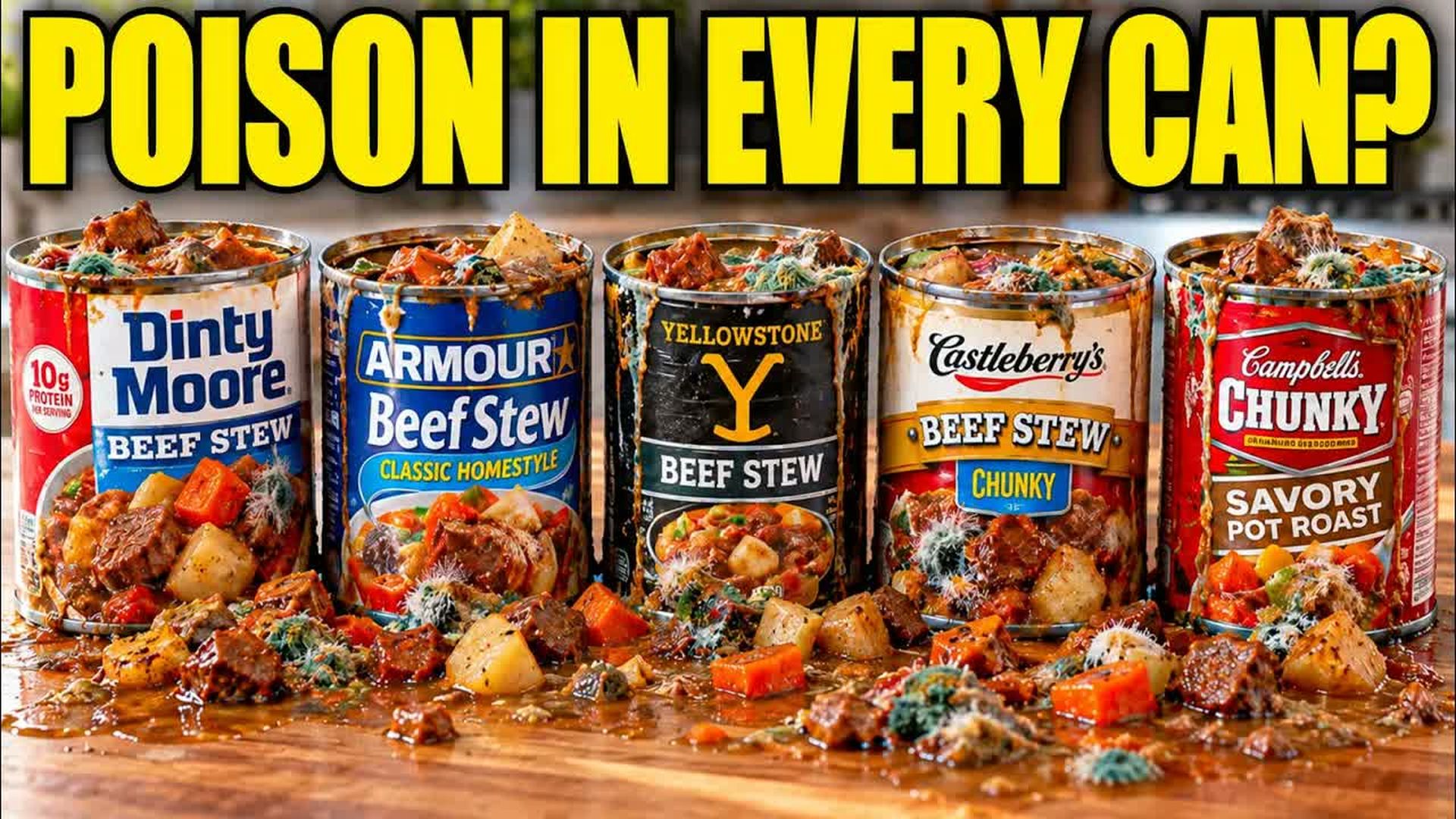
In this deep‑dive, the hosts peel back the glossy labels of America’s most popular canned beef stews to reveal what’s really inside. They start with the legal quarter‑beef minimum, explaining how manufacturers meet it by padding cans with water, soy‑derived textured vegetable protein and caramel color, then use flavor enhancers to make a thin broth taste beefy. The budget Armor Star Classic Homestyle stew leads the avoid list, with water as the first ingredient, a slew of additives, and up to 2,900 mg of sodium in a single can.Next up is Dinty Moore’s “25 % Less Sodium” version, which tricks shoppers with a misleading low‑sodium claim while still delivering 740 mg of sodium per cup and a hidden soy‑protein blend. Kroger’s store‑brand stew follows, hiding a beef‑crumble‑plus‑soy matrix inside parentheses and packing three separate doses of caramel color, pushing the sodium count past 970 mg per serving.The investigation then turns to a historic safety failure: Castleberry’s Chunky Beef Stew, whose 2007 botulism outbreak exposed the importance of the EST plant code inside the USDA inspection mark. Modern Castleberry’s still relies on soy and starch, mirroring the earlier offenders.Finally, the hosts present three stews that actually deliver real meat and healthier nutrition. The standout is Ruprecht Irish Beef Stew—USDA Choice beef, sous‑vide cooked, with fresh vegetables, only 570 mg of sodium per serving and 17 g of protein. Mountain House’s pouch also earns praise for using real beef and limiting additives, though it costs more. The episode closes with five practical aisle rules: watch for “textured” soy, verify serving counts, understand true low‑sodium thresholds, check the first ingredient, and decode the EST plant number.Armed with these insights, listeners can avoid the 80 % market share can that masks cheap fillers and choose stews that truly satisfy both palate and nutrition goals.
Categories: Food