This content is not available in your region
CE73-Costco Kirkland Snacks to AVOID at All Costs And 5 Cleaner Picks - Consumer Exposed
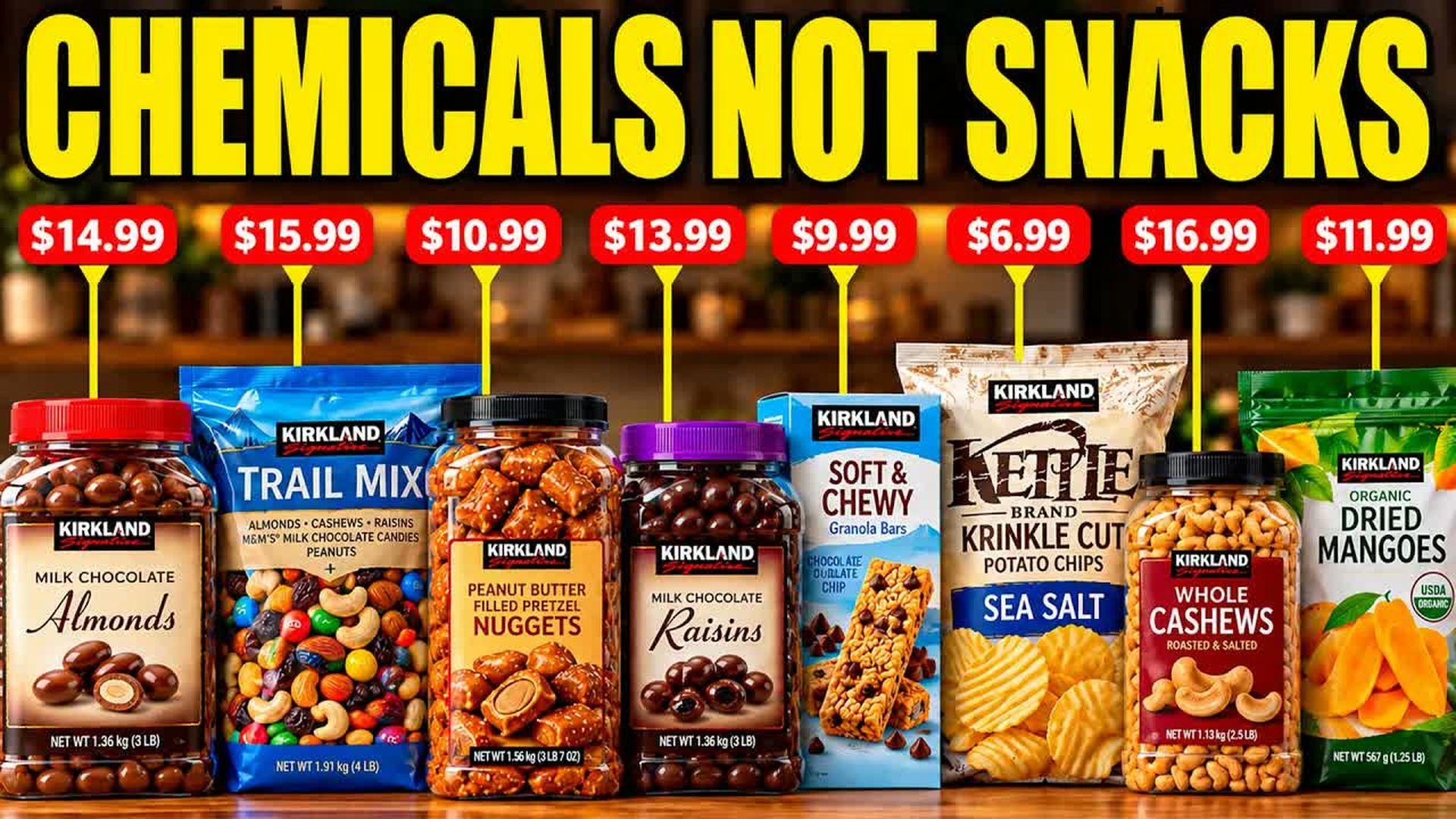
The episode pulls back the curtain on Costco’s Kirkland Signature snack line, revealing how trusted branding can mask hidden health hazards. Starting with the Kettle Brand potato chips, the hosts explain that cooking in high‑omega‑6 sunflower and safflower oils pushes the fats past their stability point, spawning aldehydes and elevated acrylamide—both linked to inflammation and cardiovascular risk—yet no Proposition 65 warning appears. The deep, scorched aroma is a red flag, not a badge of craftsmanship.Next, the rice crackers are dissected: despite their low‑calorie promise, they spike blood glucose faster than white bread and hide concentrated glutamate within yeast extract, sidestepping MSG labeling. The dark‑chocolate‑covered acai and blueberry bars sound antioxidant‑rich, but the bulk of the product is sugar and vegetable fat, with compound chocolate that strips away flavanols, leaving only a sugary coating over trace fruit.Granola bars, marketed as wholesome lunchbox staples, undergo ultra‑processing that destroys oat fiber structure, replacing it with high‑fructose corn syrup, glucose syrup, and carrageenan—an emulsifier tied to gut inflammation. The organic fruit‑and‑vegetable pouches, while certified, deliver a juice‑like sugar water that bypasses chewing, causing rapid glucose absorption akin to drinking soda.Protein bars boast high protein counts, yet conceal a soy‑protein isolate extracted with hexane and a gut‑disrupting blend of sucralose and maltitol, especially problematic post‑workout when gut permeability is heightened. Microwave kettle‑corn popcorn bags expose consumers to PFAS chemicals that leach from the lining during heating, while engineered sweet‑salty formulas hijack satiety signals to drive overconsumption.After cataloguing ten problematic products, the hosts pivot to five cleaner alternatives. Seaweed snacks, free of PFAS and low‑temperature oil coatings, supply natural iodine without hidden additives. Raw walnuts emerge as the top pick: unroasted, oil‑free, and packed with intact alpha‑linolenic omega‑3s, offering peer‑reviewed cardiovascular and cognitive benefits. The segment concludes with practical tips—scrutinize the first five ingredients and assess texture—to empower listeners to make informed choices in the bulk aisles.Bold, evidence‑driven, and unapologetically critical, this episode equips consumers to see past the Kirkland label’s promise of honesty and choose snacks that truly support health.
Categories: Food