This content is not available in your region
CE65-I Investigated 16 US Almond Milk Brands Only 6 Actually Use Real Almonds - Consumer Exposed
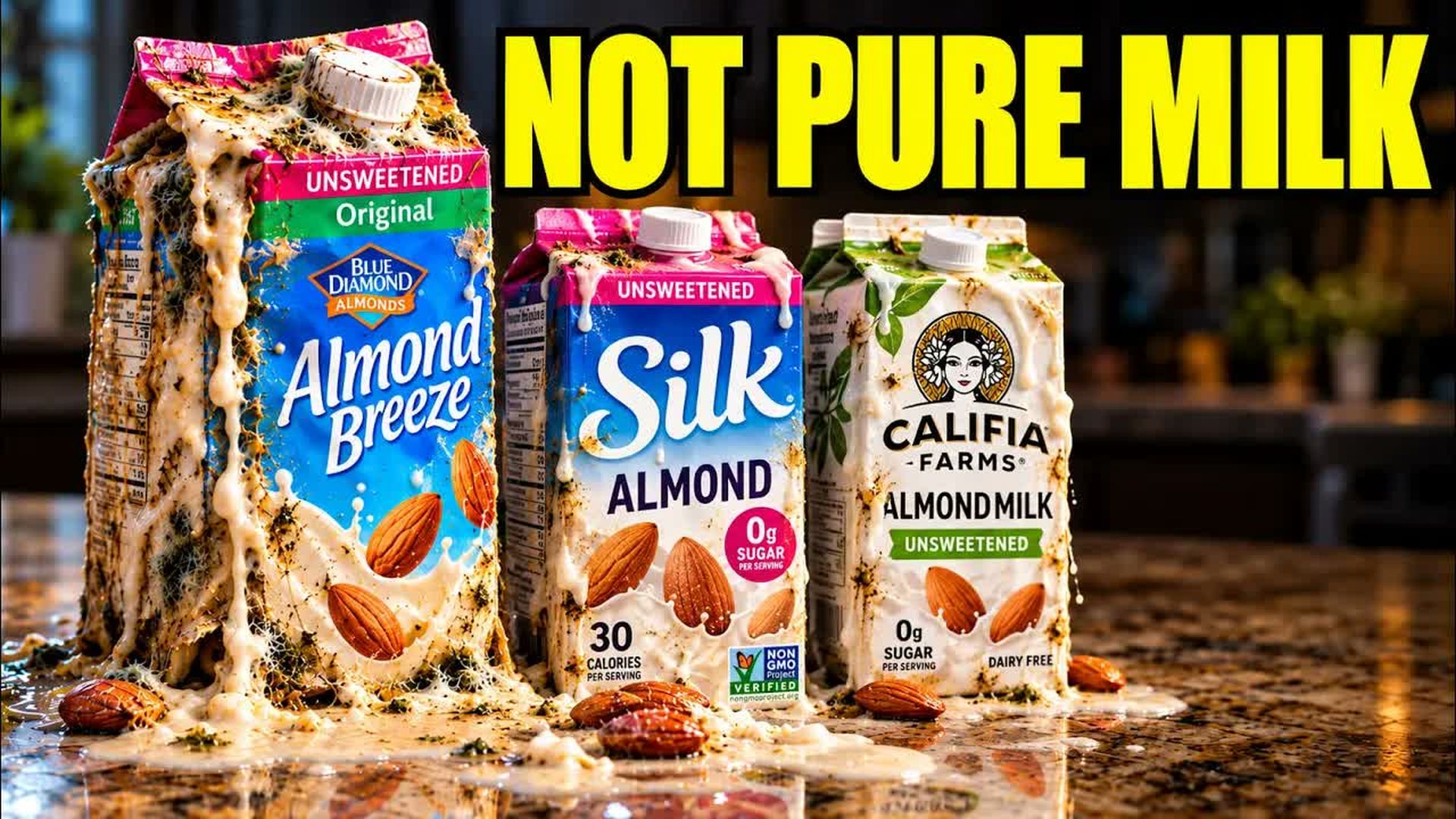
The hosts peel back the glossy cartons of America’s most trusted almond milks to reveal a startling truth: most contain only 2‑10% real almonds, the rest being water, industrial gums, and hidden additives. They start with Kirkland Signature, the bulk‑store staple that swaps almonds for sunflower lecithin and bacterial‑fermented gelling gum, delivering just 1 gram of protein per cup. Trader Joe’s follows, hiding three stabilizers and vague "natural flavors" behind an affordable price tag, while Planet Oat’s almond blends push almonds down the ingredient list behind sugar and gel. Great Value’s ultra‑cheap formula stacks three gums, a combo linked by nutrition research to gut inflammation and insulin resistance. Calafia’s premium‑looking non‑organic line mirrors budget brands with the same gum‑laden recipe, despite a higher price. Dream’s historic use of carrageenan raises red‑flag research on gut permeability and metabolic disease. So Delicious and Silk, both owned by Danone, share a corporate supply chain that relies on locust bean gum, sunflower lecithin, and synthetic vitamin blends to mask low almond content and added sugars. The investigation culminates with the few brands that actually deliver almond‑based milk: Three Trees, whose organic unsweetened product lists only almonds and filtered water, and Malk Organics, which uses sprouted almonds, sea salt, and water—eliminating gums, carrageenan, and synthetic additives while boosting mineral absorption. The hosts equip listeners with a simple test: flip the carton, check protein (1 g = decorative almonds, 3 g + = real nutrition) and count stabilizers. This episode arms shoppers with the knowledge to spot deceptive labeling, understand the health implications of ultra‑processed additives, and choose genuinely almond‑rich alternatives.
Categories: Food