This content is not available in your region
TBA34-What the Ojibwe Said About the Copper Miners Who Came Before Documented in 1888 - The Buried Archive
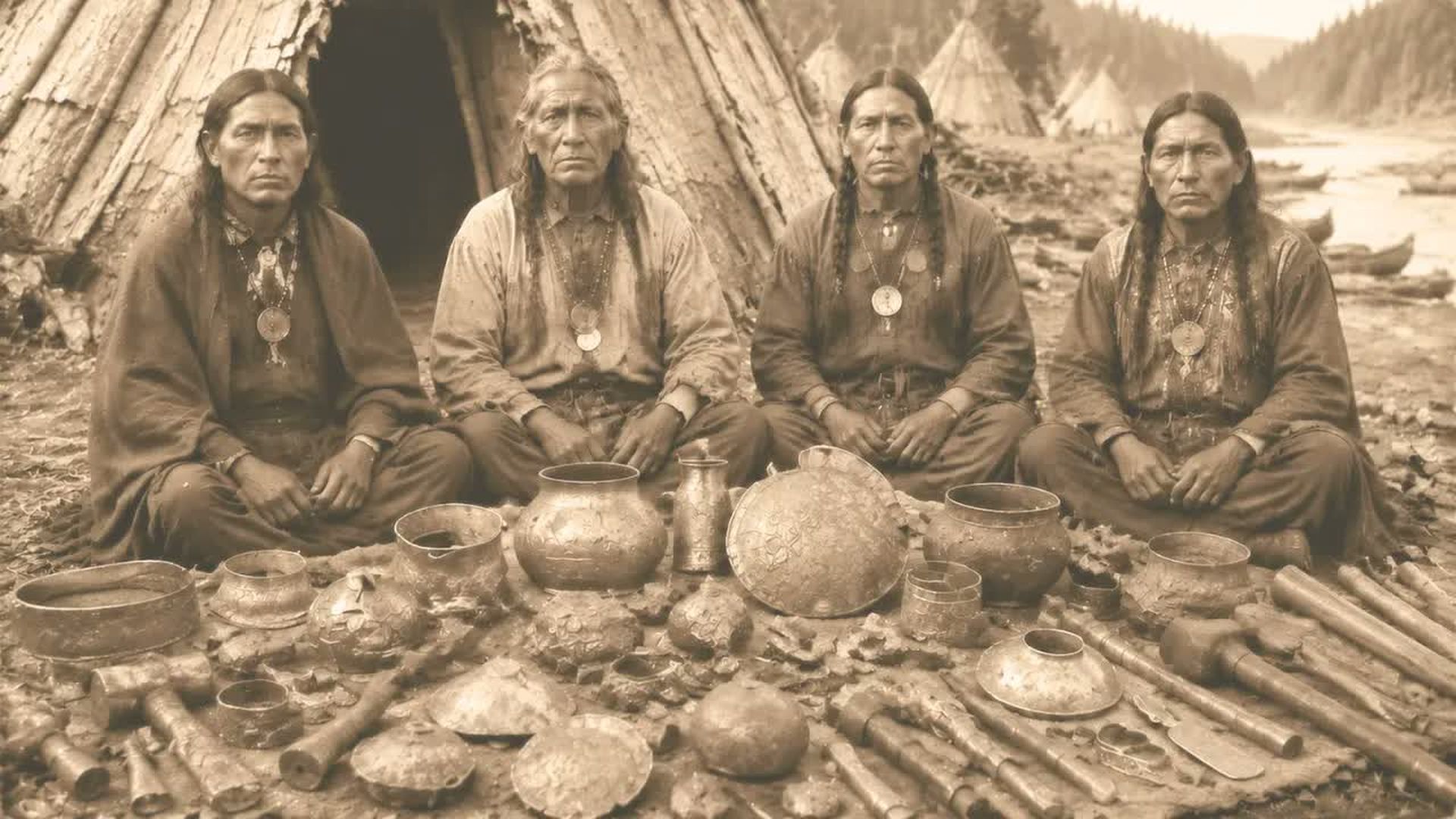
In 1888, an Ojibwe elder recounts the story of ancient copper miners, predating recorded history and European settlers, who laboriously extracted copper from Lake Superior. This sophisticated operation, described in intricate detail, presents a narrative that contradicts mainstream academic perspectives. The elder speaks of Isle Royale and the organized excavation of thousands of pits, drawing a connection between these efforts and a large-scale resource extraction enterprise that lasted millennia. Radiocarbon dating reveals that copper mining began as early as 5000 BCE and continued until around 1200 BCE, abruptly stopping without a clear reason. The Ojibwe account suggests these miners were not indigenous but rather a distinct group that traveled from across the waters, conscious of their transatlantic trade. The alignment of the copper depletion and the collapse of Mediterranean Bronze Age civilizations raises profound questions about a forgotten maritime network of ancient cultures connected by resource trade. With records showing an astonishing 500,000 tons of copper taken from this region, this episode challenges the narrative of isolated early civilizations. Instead, it highlights a complex web of cross-continental interactions, with the Ojibwe oral tradition serving as a vital link to understanding a hidden chapter of history that, until now, has remained buried beneath the surface. The ancient wisdom preserved through generations argues not just for a recognition of industrial copper mining in North America but also for a reevaluation of the relationships between these lost civilizations and their impact on the world.
Categories: Entertainment