This content is not available in your region
TBA130-The Ancient Gear Found in a Colorado Drift Has Teeth Cut to a Tolerance No 1890s Shop Could Hold - The Buried Archive
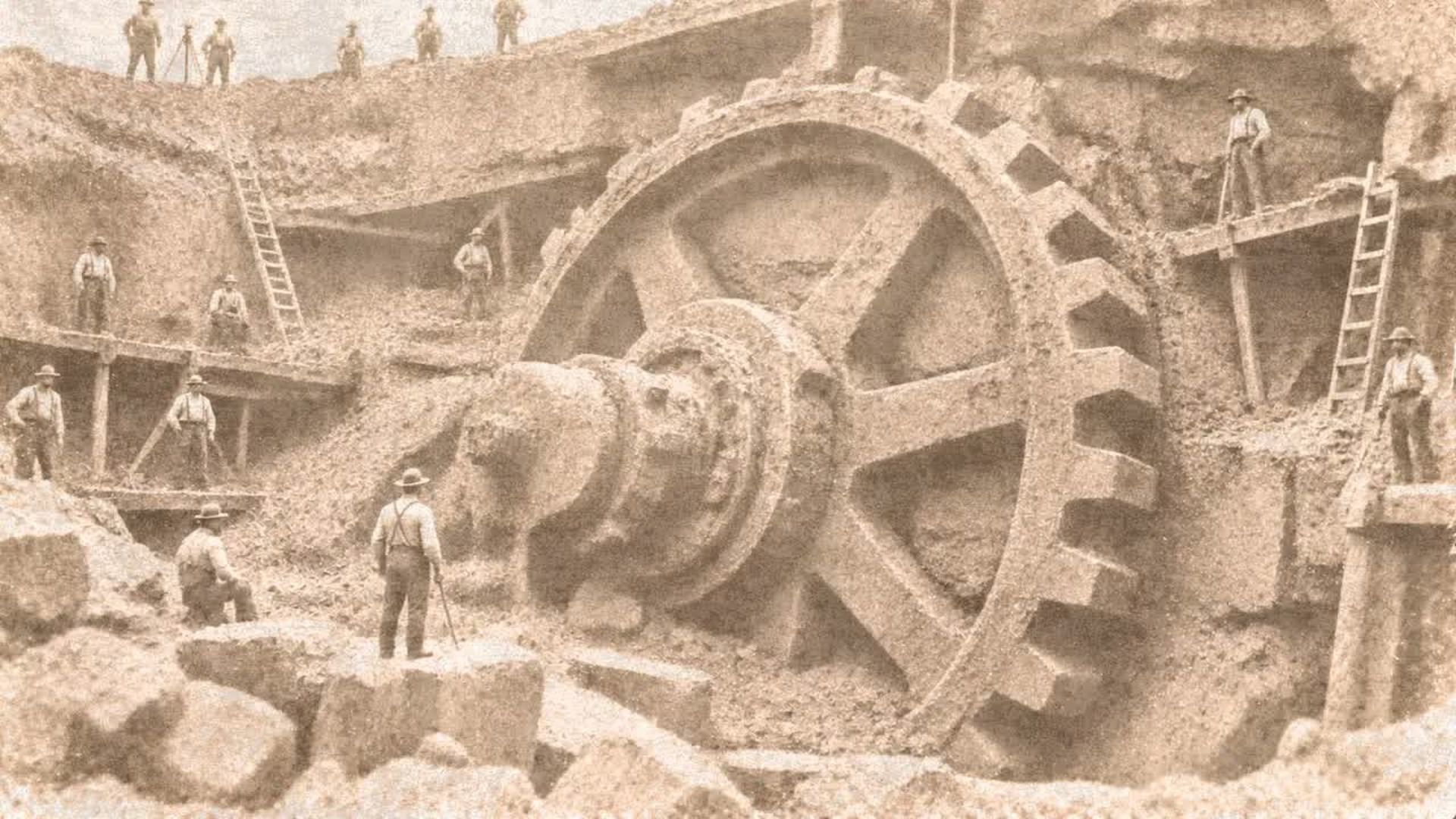
A 19th‑century gear, unearthed 400 feet below the San Juan Mountains in 1897, defies every expectation of its era. The miners who pulled the quartz‑encased disc were seasoned laborers, not dreamers, and they brought the object to shift boss Elias Carpenter. By kerosene lantern light Carpenter ran his thumb over the teeth, feeling a tolerance tighter than any locomotive valve gear of the time. He later told his crew that the maker was someone they would never meet—a statement that has haunted the gear’s custodians for more than a century.The gear passed through four families, two safes, and a century‑old affidavit, never displayed, never sold. Hollis, a contemporary observer, examined the metal and concluded it was neither iron, brass, bronze, silver nor pewter. Its density, hardness, and resistance to rust suggested an unknown alloy, and the involute tooth profile was cut to a ten‑thousandth‑of‑an‑inch precision no 1890s shop could achieve. Hollis wrote to his brother, noting that the evidence left no plausible industrial source.Mathematician Leonhard Euler first described the involute curve in the 18th century, yet the Colorado gear embodies a level of precision that only became common in the mid‑19th century. The quartz seam that sealed the gear is believed to predate the 16th century, making the artifact appear in a geological context older than the technology it displays. This clash forces a reconsideration of the conventional timeline of high‑tolerance engineering.The hosts of The Buried Archive guide listeners through the eyewitness accounts, the material analysis, and the broader hypothesis that an advanced, now‑lost civilization once mastered precision gear‑making. They argue that the gear is a “surveyors’ mark” left by an unknown hand, pointing toward a forgotten chapter of human ingenuity—no aliens, no magic, just the possibility that societies have risen, fallen, and rebuilt technical knowledge multiple times. As the mountain continues to yield its secrets, the gear remains a quiet invitation to listen, to add one careful observation to another, and to redraw the map of our technological past.
Categories: Entertainment