This content is not available in your region
TBA123-The Ancient Tool Found in a Tennessee Copper Pit The Cherokee Said It Was Left Behind - The Buried Archive
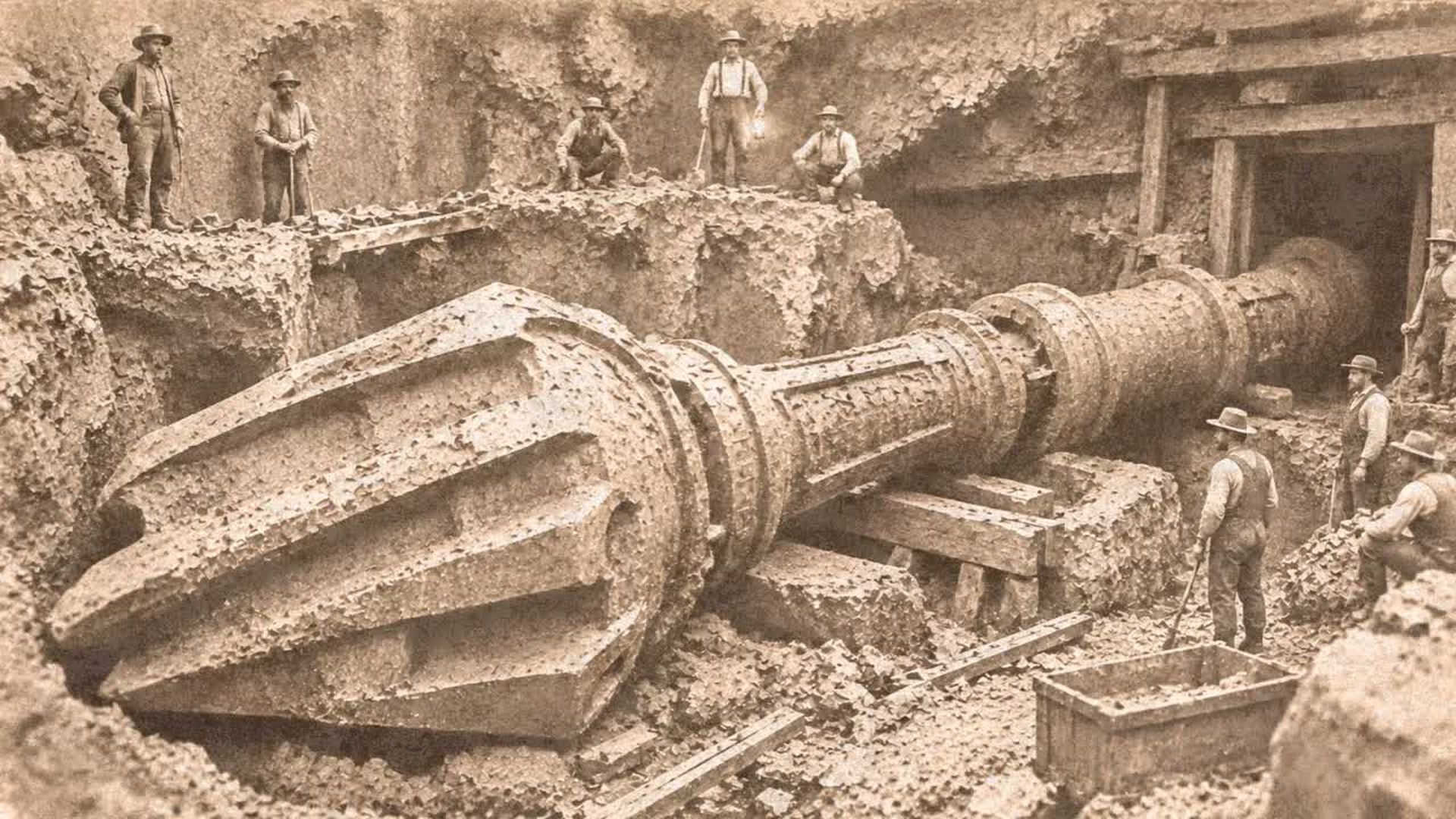
In 1878 a crew at the Burra Burrow Copper Works in the Ducktown Basin struck something that rang like metal, not rock. Shift foreman Rhys Pengelly hauled a dark‑grey alloy tool to the surface—a flattened pear, seven inches long, threaded with a pitch no American machinist of the era could recognize, its five deep grooves still scented of pine smoke. Engineer Oliver Pryor Harville, trained at the Columbia School of Mines, documented the find in a meticulous notebook now housed in the Tennessee State Library. He sent a wire to a Knoxville professor, then rode to the ridge where Cherokee elder Lamech Walkingstick lived. Walkingstick, his wife Nancy Standingdeer, and their family had been hearing the same story for generations: "They were left behind. They were never ours. They were never yours." He handed Harville a tiny flake of the same alloy, a heirloom from his grandfather, confirming an oral tradition that pre‑dated Cherokee settlement. The tool was crated and shipped to the Smithsonian, only to vanish by 1891. Harville’s notes and Walkingstick’s nine‑thousand‑word testimony are the two primary sources that anchor a broader pattern of anomalous artifacts—beads, plates, tubing—recovered from the Copper Basin’s sulfide zone over a century. Each discovery follows the same arc: uncovered, recorded, acquired, then lost, suggesting a forgotten technological layer older than any known southeastern metallurgy. The episode weaves the hard‑won engineering details, the Cherokee narrative, and the mystery of a vanished museum piece into a compelling case that the basin’s buried tools were markers left by a “first people” whose advanced alloy work vanished long before the Mississippian mounds. Listeners will hear the clash of scientific rigor and indigenous memory, the warmth of the object under a lantern, and the lingering question: what else lies hidden beneath the copper‑rich earth?
Categories: Entertainment