This content is not available in your region
TBA121-The Ancient Machine Found in a Nevada Shaft in 1886 The Paiute Already Had a Name for It - The Buried Archive
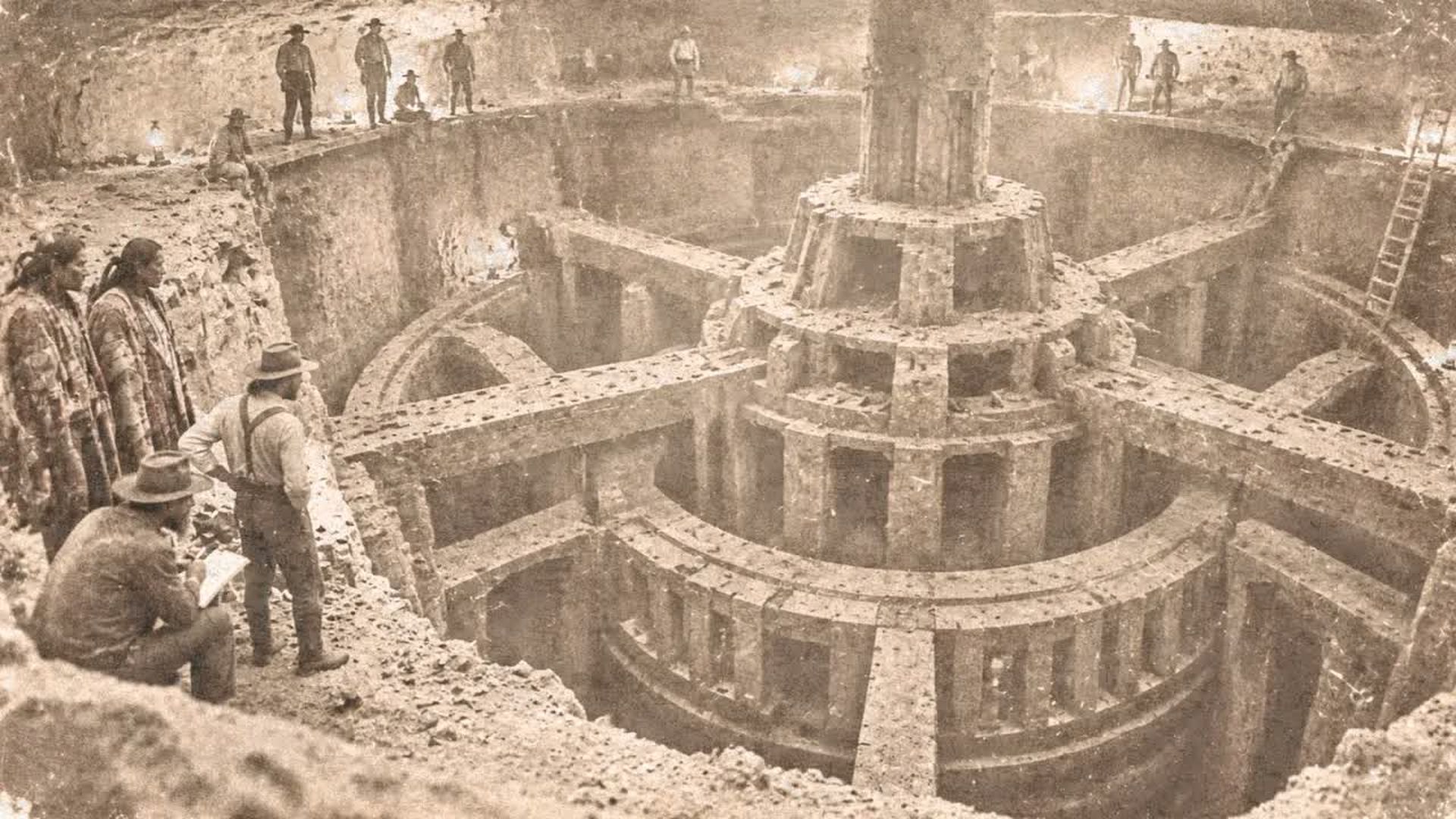
In 1886 miners in a Nevada shaft unearthed a cylindrical device that defied every contemporary industrial explanation. Geologists later placed the surrounding sediment in Pleistocene layers, meaning the object had been buried for tens of thousands of years. The find sparked newspaper headlines, collector interest, and a frantic scramble by the scientific establishment to file it away as an oddity. Yet the most striking reaction came from the Paiute people who had lived in the Great Basin for countless generations. When the miners described the object, Paiute elders instantly recognized it as the "Pneuma T"—a device long recorded in their oral tradition as belonging to the Numiti, the ancient builders who pre‑dated the Paiute and vanished without a trace. The Numiti are described not as ancestors but as a distinct, technologically capable culture that left behind underground works, precise nodes, and engineered structures. The Nevada shaft find matches the dimensions, material quality, and patterned projections described in Paiute narratives, confirming a prediction that existed in oral memory long before any modern excavation.The episode weaves together three strands: the original 1886 eyewitness accounts and the later geological dating; the consistent, cross‑generational Paiute testimony about the Numiti and their Pneuma T devices; and the broader pattern of thirty‑five similar anomalous cases that disappear after discovery, acquisition, and loss. Host commentary highlights how academic incentives marginalise such evidence, leaving a gap between documentary history and physical artifacts that refuses easy classification. Listeners are invited to consider what a single, well‑documented anomaly—backed by indigenous tradition and deep‑time geology—might mean for the accepted timeline of human civilization in the Americas.The narrative underscores that the object’s existence, its burial in undisturbed Pleistocene sediment, and its precise match to Paiute oral tradition together form a compelling challenge to conventional archaeology, urging a re‑examination of how anomalous evidence is treated in mainstream scholarship.
Categories: Entertainment