This content is not available in your region
TBA112-The Ancient Chisel Found in an Ohio Coal Seam Was Too Heavy for Two Men to Lift - The Buried Archive
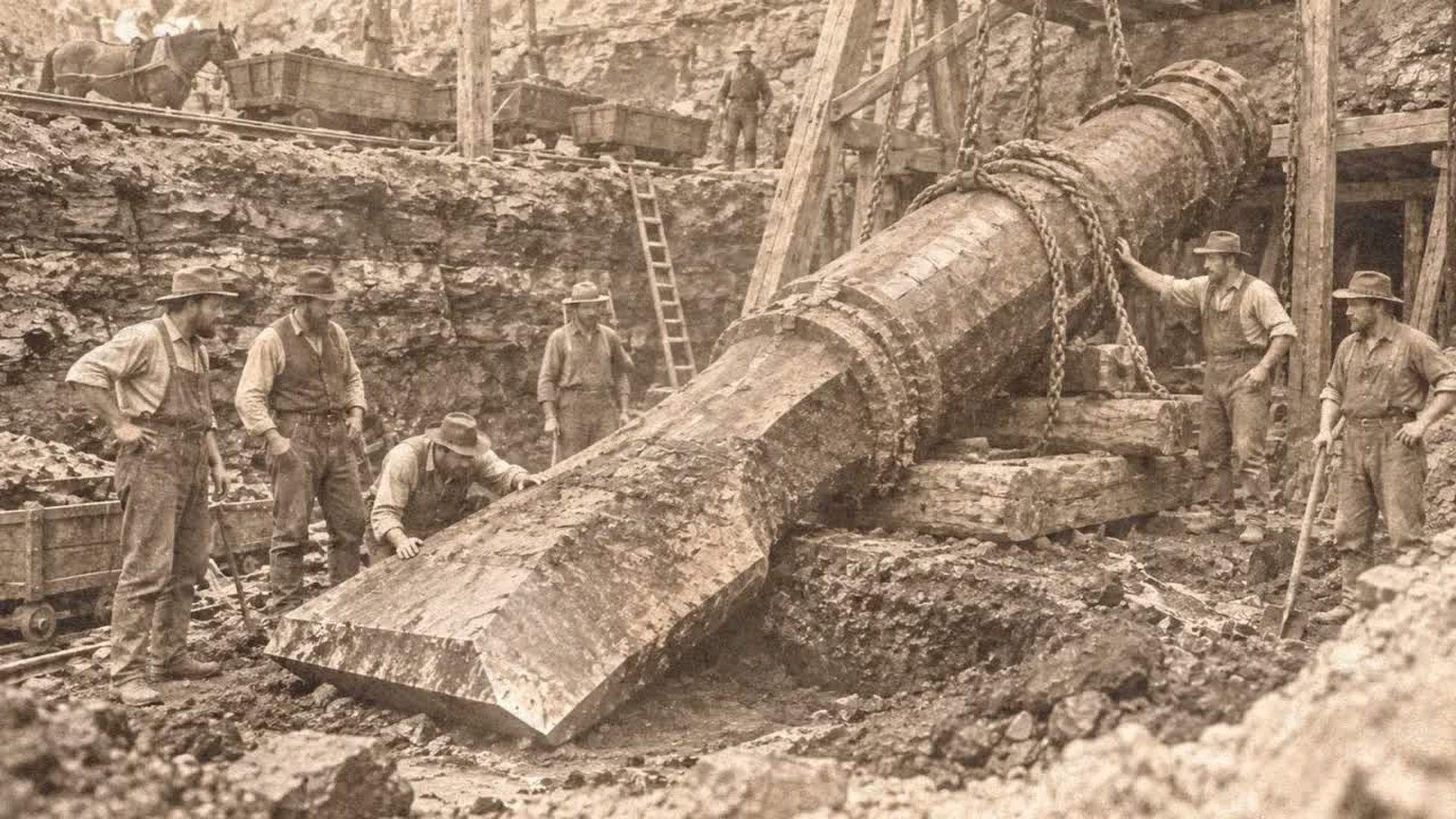
In 1869 two Tuscarawas County miners, Frederick Hartman and Elias Boggs, struck a two‑foot, dark‑grey rod that defied physics: a chisel weighing between 140 and 160 pounds, denser than lead and composed of an unknown alloy. State assistant geologist Elbridge Prescott documented the find, noting nine evenly spaced rings along the shaft and sending a filing to a Columbus chemist who reported a metal not on the periodic table. The chisel was recorded in a Hocking Valley Mining Company ledger, reproduced in an 1872 Ohio Geological Survey pamphlet, displayed briefly in the mine office, photographed by itinerant photographer Cornelius Vance, and then shipped to the State Geologist’s office before vanishing from the Smithsonian’s 19th‑century holdings. Prescott’s meticulous account highlights a seamless coal horizon—no fissures, no post‑depositional disturbance—suggesting the tool was encased when the anthracitic seam formed 300 million years ago. The episode weaves this anomaly into a broader pattern of 35 similar cases where extraordinary artifacts are discovered, documented, acquired, and then erased. It examines institutional resistance: missing accession records, the loss of Vance’s glass‑plate negative in a 1932 fire, and decades of failed attempts to locate the chisel. The hosts argue that the chisel’s ultra‑heavy, non‑metallic composition points to an ancient ultrasonic tool technology, a hypothesis that could reframe unexplained precision stonework at sites from Pumapunku to Saqqara. Listeners are urged to explore the pinned comment for the full pattern of cases, confronting how scientific establishments may suppress evidence that challenges conventional timelines.
Categories: Entertainment