This content is not available in your region
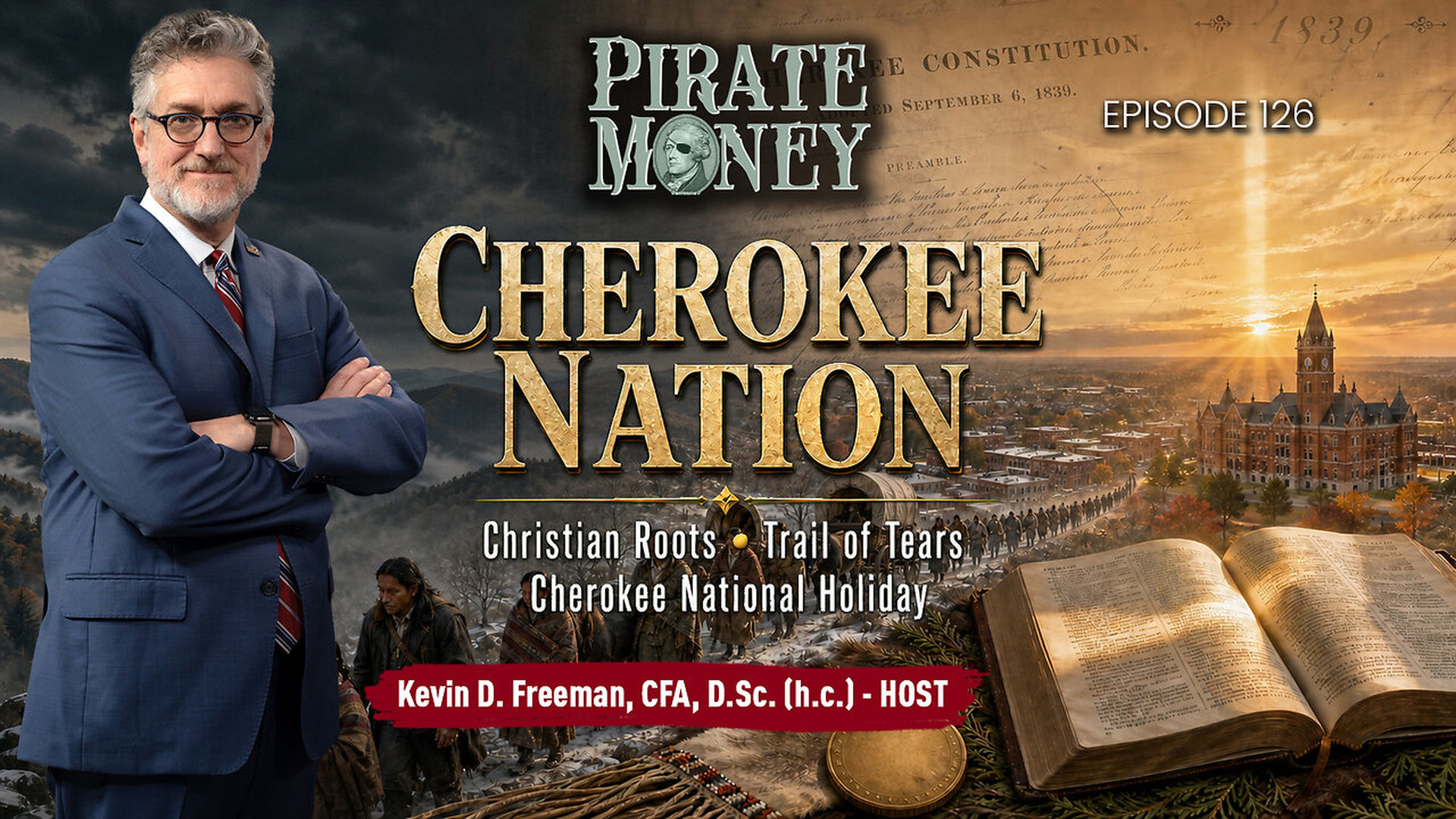
PM127-Cherokee Nation Christian Roots Trail of Tears and the Cherokee National Holiday - Pirate Money
In this episode, Kevin and Madison Freeman delve into the profound cultural and religious connections between the Cherokee Nation and Christianity, examining how the Trail of Tears shaped their identity. As they walk through Tahlequah, they reflect on a recent visit that brought them closer to their Cherokee heritage and the history of the nation. The Trail of Tears is more than a tragic chapter; it serves as a testament to the resilience of the Cherokee people and is commemorated through their National Holiday. The Freemans explore striking parallels between Cherokee beliefs and Christian doctrines, highlighting similarities in creation myths, prophecies, and moral teachings. Emmett Starr’s historical accounts reveal that some Cherokee traditions resonate deeply with biblical narratives, including the concept of a singular God manifesting in three beings that parallels the Christian Trinity. The episode challenges stereotypes about Native American spirituality by presenting a nuanced understanding of Cherokee theology, which includes concepts of rest and divine judgment, akin to those found in the Bible. Madison shares their family's lineage, navigating back to ancestors who lived through the upheaval of the Trail of Tears. They question the narratives that downplay the suffering experienced during this traumatic forced relocation, emphasizing the complexities of cultural survival and assimilation. As they discuss the evolution of the Cherokee Nation, including their adaptation of agriculture, trade, and Christianity, listeners are invited to consider how history shapes identity. In an era of cultural disillusionment, the Freemans argue for an appreciation of truth, recounting how historical injustices should inform a more profound understanding of faith and community. The episode concludes on a hopeful note, affirming that the bonds forged through shared faith can transcend past grievances, offering a path toward healing and reconciliation within the rich tapestry of American history.
Categories: Money