This content is not available in your region
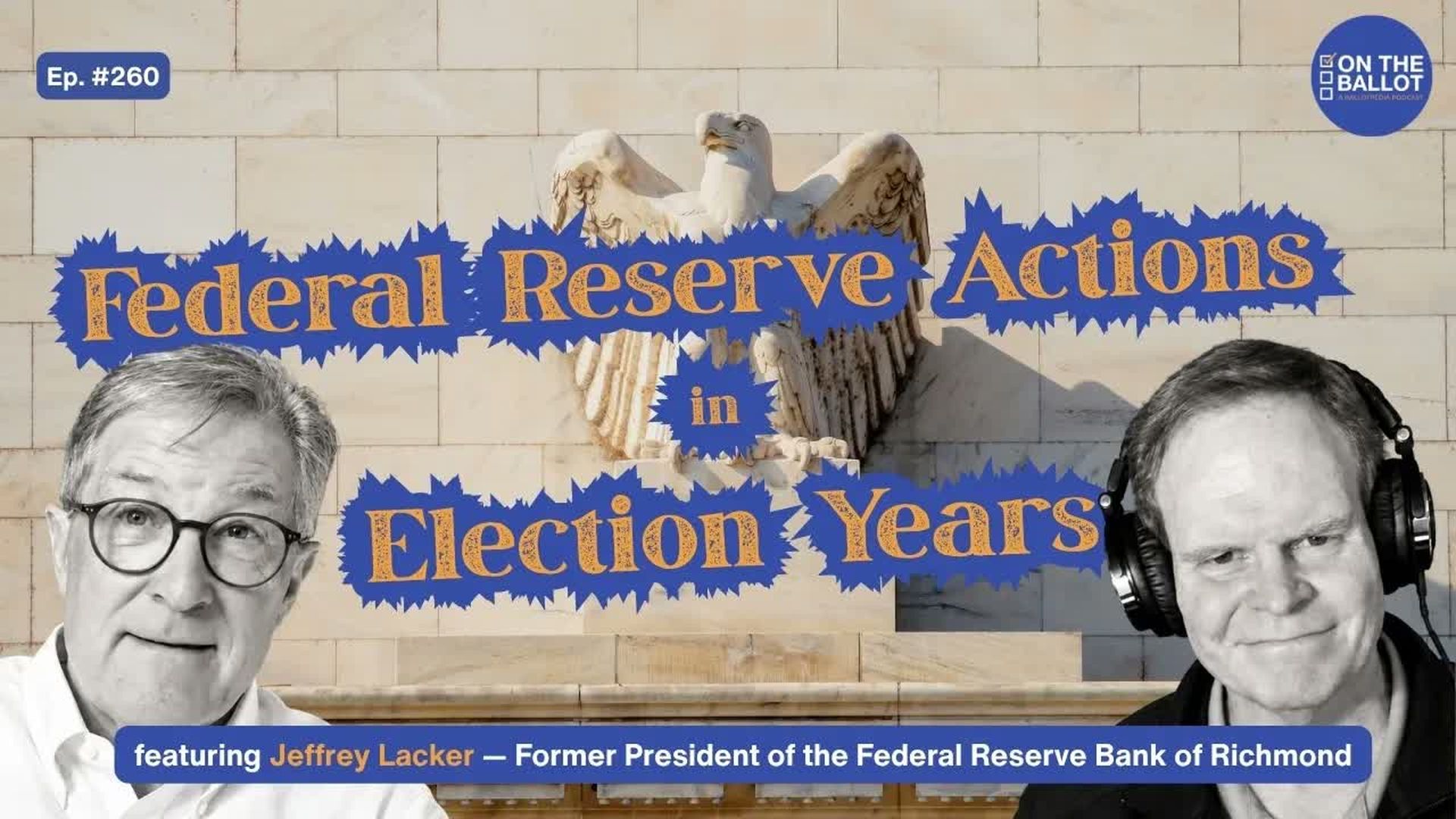
OTB108-Federal Reserve Actions in Election Years with Former Richmond Fed President Jeffrey Lacker - On The Ballot - A Ballotpedia Show
In this episode of On The Ballot, host Norman Leahy dives into the delicate dance between the Federal Reserve and the political calendar as the next FOMC meeting looms just days before the midterms. He explains how the Fed, created by Congress, strives to keep its public face focused on price stability while quietly navigating pressure from elected officials who face short‑term electoral incentives. Listeners hear vivid historical snapshots: William McChesney Martin’s reluctant compliance with Lyndon Johnson in 1968, Arthur Burns’ feeling of being hamstrung by politics, Paul Volcker’s bold stance that risked President Carter’s re‑election prospects, and Alan Greenspan’s cultivated relationships on Capitol Hill. The conversation highlights the tension between market expectations and the Fed’s communication strategy, noting how recent meetings have been timed to avoid the spotlight and how today’s officials balance transparency with the risk of over‑signalling policy intentions. Norman also breaks down why the Fed’s independence matters to voters, describing it as a technocratic institution staffed by professionals who aim to serve the public good, yet remain human and subject to political realities. The episode equips listeners with a clear framework for understanding how monetary policy, election cycles, and congressional oversight intersect, and why those dynamics matter for the economy heading into the 2024 elections.
Categories: Political Commentary