This content is not available in your region
FH109-US Gold Grab of 1933 Stolen From Americans - Forgotten History
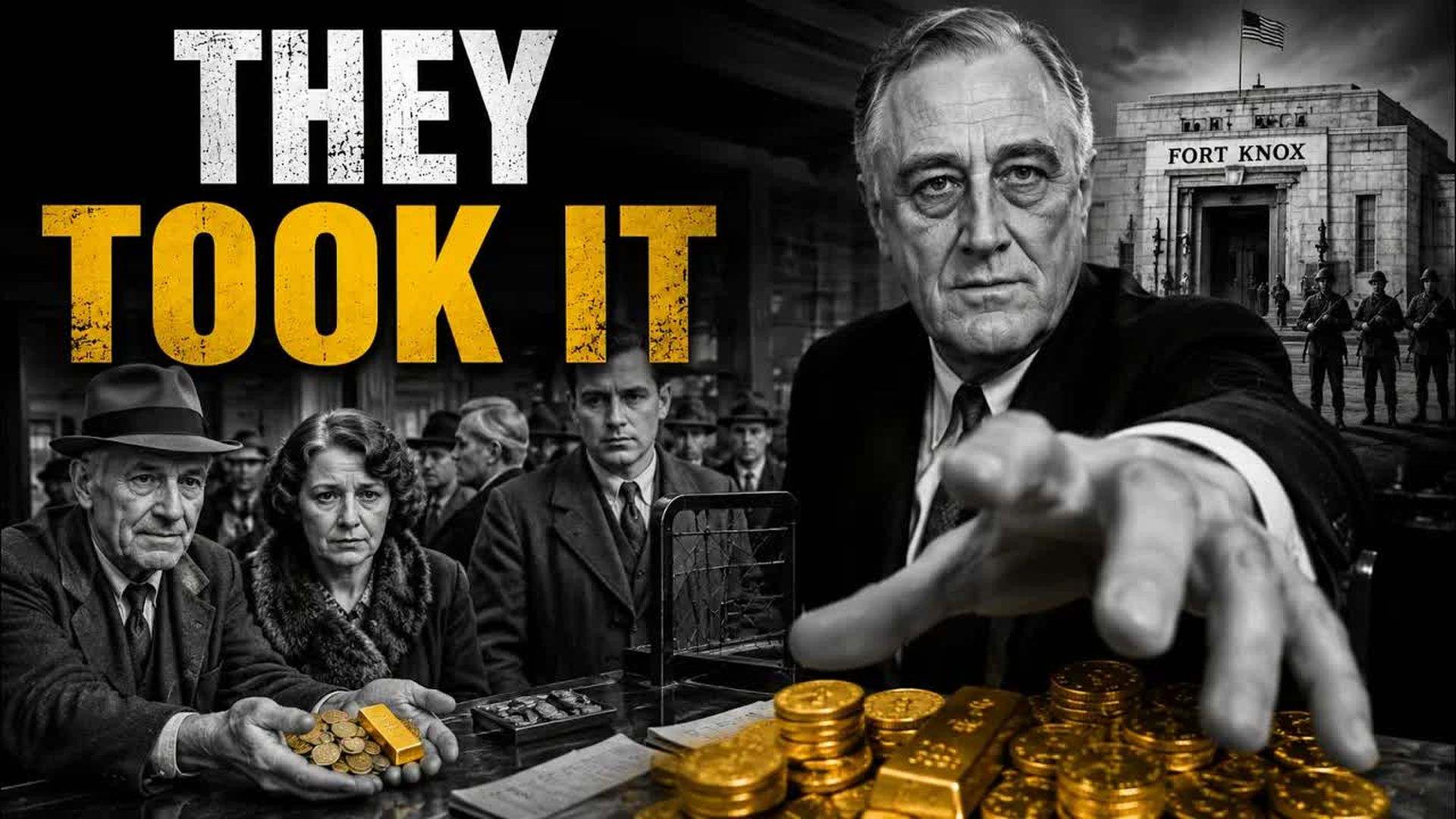
As the illusion of prosperity shattered in the wake of the 1929 market crash, Americans found themselves plunged into a financial nightmare. With banks collapsing and savings evaporating, the once-untouchable status of gold transformed into a desperate necessity for survival. In March 1933, Franklin Delano Roosevelt took a decisive step that would redefine trust in the U.S. financial system. Beneath the rhetoric of patriotism, Executive Order 6102 made it illegal for Americans to possess gold beyond a modest limit, forcing ordinary citizens to surrender their life savings as the country grappled with a national emergency. The government's portrayal of this gold surrender as a return to safety deeply masked the looming financial upheaval. Lines swirled around banks as families handed over their last vestiges of wealth in exchanged paper dollars, unaware they were about to lose the very foundation of their economic security.This episode unravels the intricate web of motives behind the government's gold seizure. Why did FDR make such a monumental shift, and how was the surrendered wealth revalued under the Gold Reserve Act just months later? With the gold now resting behind Fort Knox’s vaults, the government leveraged this newfound control, allowing extensive deficit spending that set the stage for expansive wartime financing and altered the foundational relationship between federal authority, the banking system, and the American people. As the U.S. moved into war, the absence of gold restraints allowed unprecedented levels of government spending, while private citizens grappled with the erosion of their financial security.This is not merely a historical recount of an economic policy; it is a deeper examination of the repercussions that the gold grab had on subsequent generations. Fast forward to the late 20th century, the very structure of the American monetary system began to fray under mounting pressures, ultimately leading to the decoupling of the dollar from gold in 1971. What was the long-term consequence of these pivotal policies? Join us as we explore how a simple act of surrender would ripple through time, shaping the trust in money and the government, culminating in today’s struggles with inflation and national debt. As remnants of that gold surrender echo in modern finance, the fears once faced by the American populace linger, raising pressing questions about the security of wealth and the stability of fiat currency.
Categories: Entertainment