This content is not available in your region
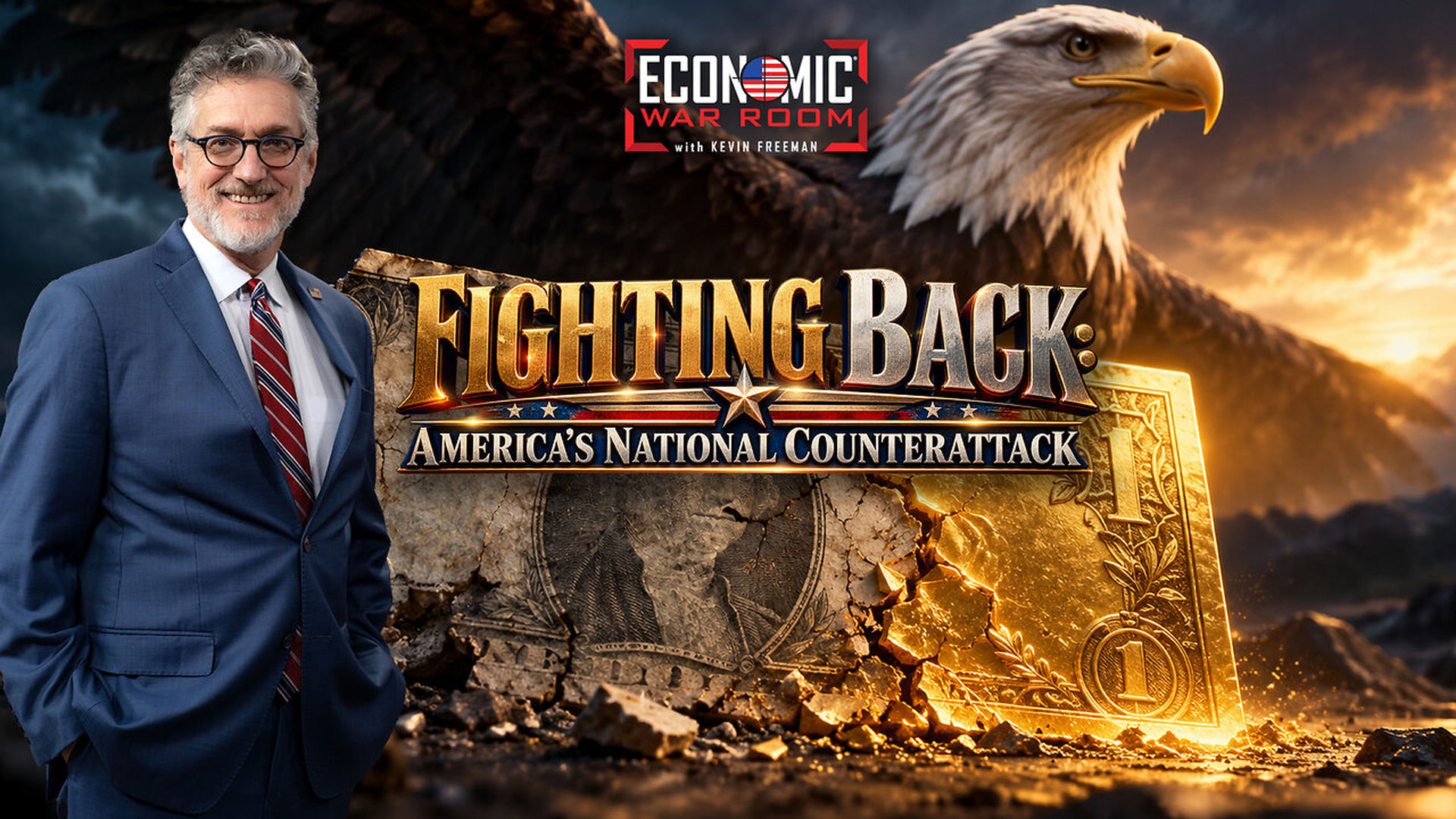
EWR421-FIGHTING BACK Americas National Counterattack - Economic War Room
Kevin Freeman returns to the Economic War Room with a bold, transcript‑driven rallying cry: America’s crises all trace back to the 1971 abandonment of sound money. He frames the six trials—debt bomb, dollar under attack, programmable CBDC, wealth gap, demographic destiny, and the endgame of invasion—as branches of one root problem. Freeman argues that a constitutional commitment to gold‑backed, state‑level “pirate money” is the only irreversible fix. He details how six states already allow gold and silver legal tender, with debit‑card‑compatible depositories ready for September 1, and legislation pending in dozens more. The host then opens a second door in Washington: economist Judy Shelton’s proposal for a 50‑year Treasury bond convertible to gold, coupled with a full audit, revaluation, and repatriation of the nation’s gold reserves—an effort he says will make America the world’s gold capital and blunt BRICS de‑dollarization. Freeman also calls out programmable money, warning that executive orders banning CBDCs are fleeting; only a permanent, constitutional ban will protect citizens from a digital currency that can be weaponized. He links the wealth gap to fiat money and cronyism, urging the opening of private markets to ordinary investors and the removal of ESG‑driven fiduciary rules. Demographic decline, he says, is an affordability issue rooted in a debased dollar, and fixing money will unlock housing, zoning, and permitting reforms. The endgame segment ties border security, vote integrity, and enforcement of existing laws to the same sound‑money foundation. Freeman cites Council of Voices members—Michelle Bachmann, Ken Blackwell, Bob McEwen, and others—who echo his view that economic sovereignty and civic institutions must move together. He promotes three new institutions (NSIC, ScanHQ, Economic Justice Board) as the permanent infrastructure needed to turn policy into lasting action. Throughout, Freeman’s tone is unapologetically bold, positioning sound money as both an inheritance and a weapon against the nation’s economic and security enemies. Listeners are urged to read his book, support pirate‑money ventures, and join the emerging institutions that will safeguard America’s liberty.
Categories: Money